





Higher education institutions are being asked to do more with less. Facilities teams are managing complex campuses and aging infrastructure, finance teams are watching operating budgets closel...



Headquarters
EnergyCAP, LLC
360 Discovery Drive
Boalsburg, PA 16827
Denver, CO
Suite 500
5445 DTC Parkway
Greenwood Village, CO 80111
Dublin, Ireland
Unit F, The Digital Court, Rainsford Street,
Dublin 8, D08 R2YP, Ireland
Phone: 877.327.3702
Fax: 719.623.0577

If you manage utility costs, you know the drill: exports, pivots, and “quick” ad hoc requests that soak up time. Teams need energy management software that moves from question to answer without the spreadsheet shuffle. We’re excited to introduce EnergyCAP Watts AI: smarter energy management, powered by Artificial Intelligence.
Watts is EnergyCAP’s AI engine. It’s turning utility data into clear answers and laying the foundation for deep AI-driven insights across reporting, rates, planning, and recommendations.
Today, it powers Watts AI chat: conversational reporting for utility bill data, and the first Watts-powered feature available in EnergyCAP Utility Management. But Watts is built for more than a chat window; it’s the long-term home for EnergyCAP’s AI capabilities, designed to bring together energy and utility data, your operational context, and our decades of utility expertise to deliver action-ready data.
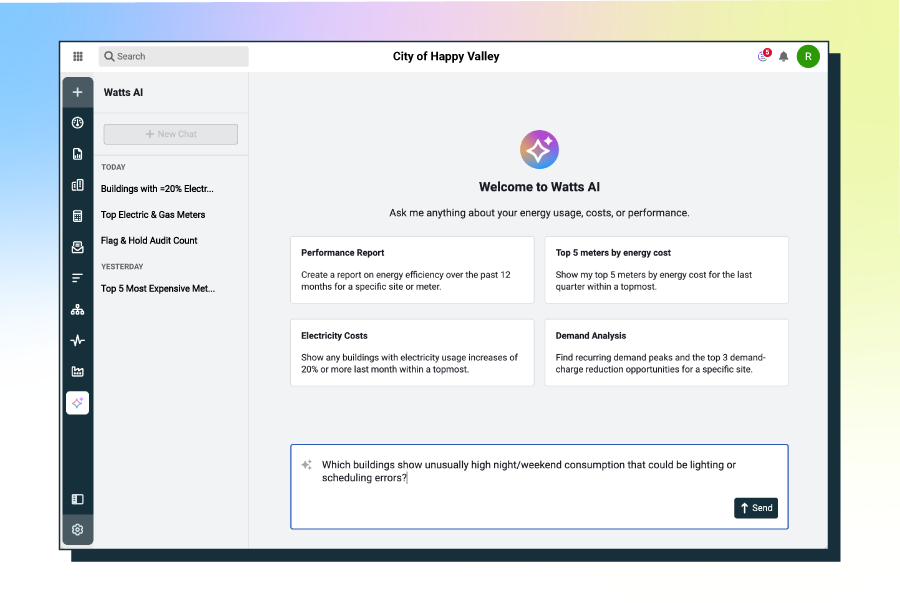
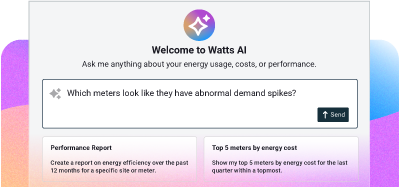
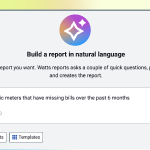
Watts AI chat starts with plain-language, conversational prompts. Watts returns the numbers plus a short explanation, so the takeaway stays clear.
Follow up to tighten the scope or add detail. Watts AI chat supports fast exploration and clean takeaways, while your built-in reports, customizable dashboards, and Interval Data handle recordkeeping and deeper analysis.
Watts AI chat is ideal for focused analyses that typically trigger a flurry of exports. It is well-suited to spotting spikes, comparing recent periods, ranking buildings by cost, and quickly surfacing likely drivers.

Here are a few questions you can ask:
AI isn’t new at EnergyCAP. For years, machine learning and automation have worked behind the scenes across the platform. Just a few examples include Trend Insights, bill audits, forecast-to-bill comparisons that surface issues faster, AI-assisted utility bill data extraction down to the line-item level, and in-product AI help that delivers custom answers 24/7.
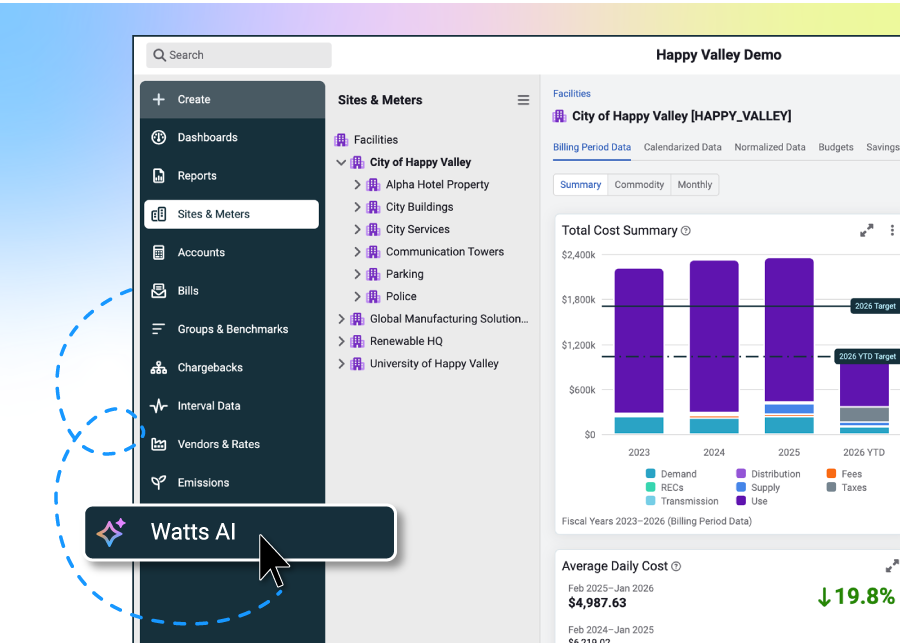
Watts builds on that foundation, grounded in decades of utility expertise, so teams get AI that’s clear about what it’s doing, consistent in results, and easy to validate. Watts lives in the EnergyCAP platform, so you don’t have to change how you organize data. Analysis stays inside EnergyCAP, which preserves context and consistency across teams.
EnergyCAP Watts AI is currently available inside EnergyCAP Utility Management to a select group of customers, but will be accessible to all EnergyCAP customers very soon. Most teams begin with a small set of priority sites or meters, see quick wins with their most critical data, and then expand to additional locations and utility types.
Ready to see EnergyCAP Watts AI in action? Request a demo of our vast portfolio of AI capabilities, explore real-world energy management, and plan your rollout with our team.
General-purpose chat tools are designed for broad questions, and many rely on user-provided inputs that may be stored or publicized – a poor fit for sensitive utility and financial data.
EnergyCAP Watts AI is different. It’s purpose-built inside EnergyCAP to work with the data and context that actually drive utility spend: your bills and sensor data, our decades of insight and expertise, vendor and tariff context, integrations with other systems, and your team’s unique operational knowledge.
AI works when teams trust it, and that trust comes from context and transparency. Watts is built to be dependable, grounded in the data that drives utility spend, and designed to deliver outputs your team can validate.
Watts is just getting started. Watts is expanding with new AI capabilities that make utility and energy work faster and clearer, starting with smarter rate and tariff intelligence, analysis, and automated scenario simulation. You’ll see more AI-assisted report generation, what-if planning, and meaningful recommendations grounded in vendor and site context.
Watts keeps getting smarter by bringing together your data and operational knowledge, EnergyCAP’s decades of context, and outside intelligence where it adds value – so insights stay relevant, dependable, and easy to validate.
Watts uses the data you already manage in EnergyCAP, starting with utility bill data and the related context that makes it meaningful, like sites, meters, accounts, and vendors. Watts is designed to keep your data in your control: it works within your EnergyCAP environment and pairs your information with EnergyCAP’s utility expertise and insights to deliver answers that stay grounded in real-world utility workflows.
As Watts expands, it will continue building on this same foundation – your data plus the right context – so outputs stay consistent, dependable, and easy for your team to validate.
Watts AI chat excels at focused questions where you want a quick, trustworthy summary. Typical asks include 12-month site snapshots, cost by account, buildings with unusual usage, or meters with recurring demand peaks. It is designed to speed up ad hoc diagnostics and sanity checks without leaving EnergyCAP Utility Management.
EnergyCAP Watts AI is currently available to a select group of customers, and broader availability is coming soon. To check eligibility or ask about access, reach out to your EnergyCAP representative.
Once Watts is enabled, start with the chat feature – try a few targeted prompts, and review results together to build confidence and shared norms. For rollout guidance or licensing details, contact your EnergyCAP representative.
EnergyCAP Watts AI runs inside EnergyCAP, so your utility and financial data stays in your EnergyCAP environment, it isn’t shared with other customers or made public. EnergyCAP’s security program is validated through independent audits, including SOC 2 Type II certification, FedRAMP, and others.
Watts is built with the same security and access controls you already use in EnergyCAP, like role-based permissions, and EnergyCAP continuously tests and improves its security posture through practices like independent assessments and penetration testing.