




EnergyCAP’s recent State of Utilities survey makes one thing clear: utility costs are rising. Aging infrastructure, new loads including data centers, and rate increases are all adding pressure...



Headquarters
EnergyCAP, LLC
360 Discovery Drive
Boalsburg, PA 16827
Denver, CO
Suite 500
5445 DTC Parkway
Greenwood Village, CO 80111
Dublin, Ireland
Unit F, The Digital Court, Rainsford Street,
Dublin 8, D08 R2YP, Ireland
Phone: 877.327.3702
Fax: 719.623.0577
Utility costs keep climbing. For most organizations, that’s not news—it’s the new normal. What is news is how much pressure that’s putting on the teams managing it: higher spend, the same headcount, tougher questions from leadership, and less margin for error.
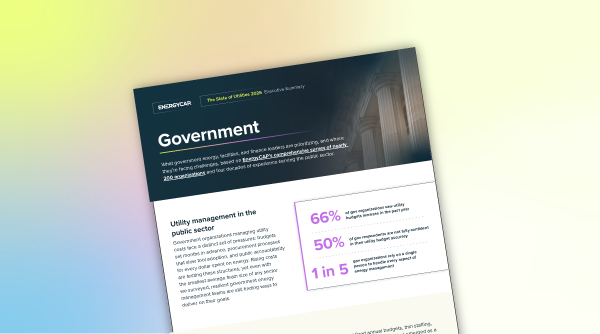
To understand how energy and utilities teams are actually navigating this, we surveyed hundreds of professionals across key industries for the EnergyCAP State of Utilities 2026 report. Here’s what stood out.
Here’s a finding worth sitting with: the people most confident about utility budgets and goals are also the furthest from the work. Executives reported 100% surety. Individual contributors and managers? Much less so.
That gap matters because it shapes the conversations teams have about tools, staffing, data quality, and resources they need to succeed. The fastest path to closing that gap is speaking leadership’s language. The teams making progress are the ones who lead with the numbers executives care about, but still connect those outcomes back to the operational work that produced them.
Confidence in utility management doesn’t come from optimism. It comes from clean data, repeatable processes, and forecasting you can count on even as rates shift or weather changes.
If you’re pressure-testing your 2026 utility cost assumptions, our free utility bill increase calculator can help you model what these increases mean for your budget.
Try the free utility bill increase calculatorAcross both EnergyCAP customers and non-customers, “find and fix waste faster” lands at the top of the 2026 goals list. That consistency is telling: regardless of how mature your program is, there’s still waste to find, and the pressure to find it faster is only growing as budgets tighten.
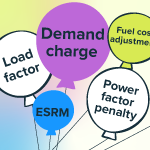
The full report breaks down where organizations are getting stuck, and what the teams making real progress are doing differently. If you need a quick refresher on what may be driving billing complexity in your organization, start by understanding the details of your utility bill charges.
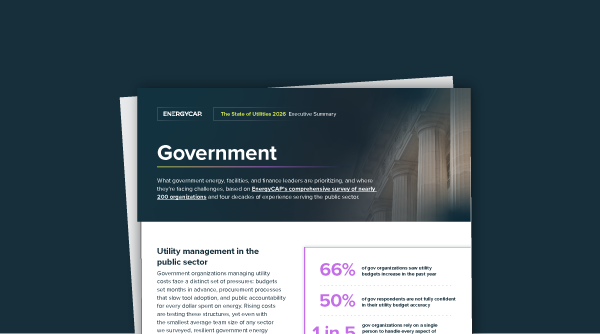
The EnergyCAP State of Utilities 2026 report has the stats, visuals, expert commentary, peer findings, and ready-to-share insights you need for leadership updates and cross-team conversations in one place.
Download the EnergyCAP State of Utilities 2026 report to see what hundreds of your peers are dealing with, what’s working, and what’s not.
Want more? Rewatch our webinar, The Utility Confidence Gap: Closing the Distance Between Plans and Reality to review the executive confidence gap findings in-depth. You can also view Beyond the Basics: Roadmap to Smarter Energy Operations in 2026 for practical ways to strengthen your process.
EnergyCAP and Centiment gathered data for this report by surveying 202 individual contributors, managers, directors, and C-suite executives who are directly involved in or aware of their company’s energy management and budget strategy.
Individuals were either existing EnergyCAP customers or worked in higher education with 5k+ students, state and local governments with 76k+ residents, healthcare with 5k+ employees, or retail with 5k+ employees.
Data was collected between January 1st and February 18th, 2026. Survey data is unweighted, and the margin of error is approximately +/-6% with a 90% confidence level.