





Retail energy teams are absorbing some of the steepest utility cost increases of any sector we surveyed, and doing it with some of the leanest energy management infrastructure in the industry....



Headquarters
EnergyCAP, LLC
360 Discovery Drive
Boalsburg, PA 16827
Denver, CO
Suite 500
5445 DTC Parkway
Greenwood Village, CO 80111
Dublin, Ireland
Unit F, The Digital Court, Rainsford Street,
Dublin 8, D08 R2YP, Ireland
Phone: 877.327.3702
Fax: 719.623.0577
Retail energy teams are absorbing some of the steepest utility cost increases of any sector we surveyed, and doing it with some of the leanest energy management infrastructure in the industry.
That’s one of the key insights from EnergyCAP’s 2026 State of Utilities survey, and it shapes everything else we found about how retail organizations are managing utility costs today. We surveyed nearly 200 energy, facilities, and finance leaders across industries, and retail stood out as a sector where confidence in meeting goals is high, but so are barriers to success.

Here are two takeaways that stood out:
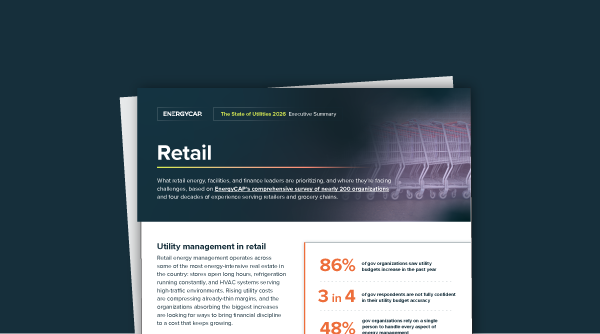
86% of retail respondents saw utility costs increase in the past year, tied with healthcare for the highest rate of any sector. But in retail, that pressure plays out differently. Cost increases don’t hit one campus or one building, but dozens or hundreds of locations simultaneously.
What makes retail’s cost challenge distinctive is the energy profile itself. For grocery and food retail, refrigeration runs 24/7 and represents a significant share of total spend. For other retailers, triple net lease arrangements mean energy managers often have limited visibility into how utility costs are structured, billed, or audited by landlords, as well as limited control over the changes and projects that can meaningfully impact usage.
Retail respondents reported the highest confidence of any sector in both their utility budget accuracy and their ability to meet their energy management goals. That determination is a real asset. So is a clear-eyed view of what stands between confidence and execution: half of retail respondents describe their energy management approach as reactive or still highly manual, and 1 in 3 are managing it with an energy team of three people or fewer.
In retail, utility management sits at the intersection of finance, shared services, and energy operations, and many organizations aren’t running it as an integrated function yet. The retailers closing the gap between confidence and results are the ones treating utility data as a financial discipline, not just a facilities concern.
There’s more in the data, including findings about how retail measures success that reveal just how financially oriented this sector’s energy management priorities are.
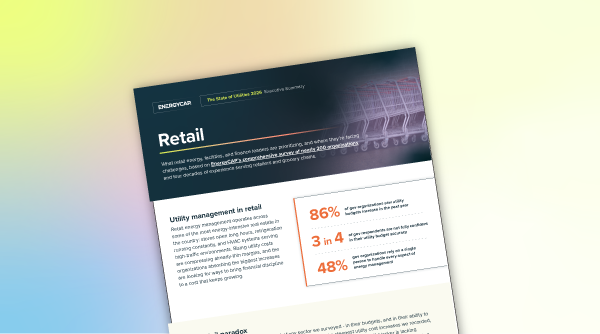
Check out the EnergyCAP State of Utilities 2026 Retail Executive Summary for the full picture: benchmarks, trends, and practical guidance built specifically for retail energy and finance teams.
Check out the EnergyCAP State of Utilities 2026 Retail Executive Summary for the full picture: benchmarks, trends, and practical guidance built specifically for retail energy and finance teams.
Get the EnergyCAP State of Utilities 2026 Retail Executive Summary