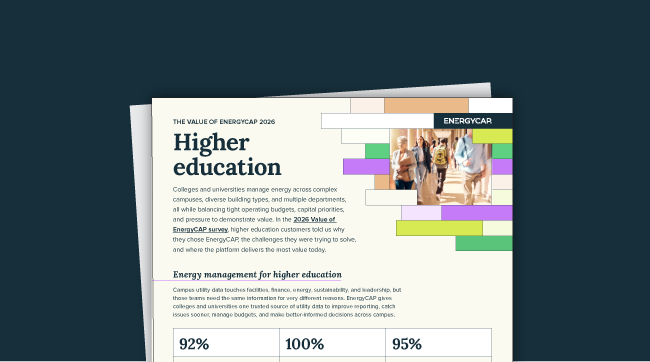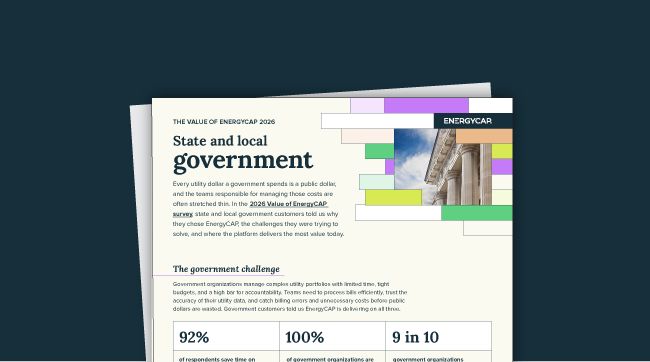








Higher education institutions are being asked to do more with less. Facilities teams are managing complex campuses and aging infrastructure, finance teams are watching operating budgets closel...



Headquarters
EnergyCAP, LLC
360 Discovery Drive
Boalsburg, PA 16827
Denver, CO
Suite 500
5445 DTC Parkway
Greenwood Village, CO 80111
Dublin, Ireland
Unit F, The Digital Court, Rainsford Street,
Dublin 8, D08 R2YP, Ireland
Phone: 877.327.3702
Fax: 719.623.0577
Many buildings have Building Automation Systems (BAS) that are technically “working,” yet operating far below their potential. Schedules drift, setpoints get overridden, sensors fail quietly, and control sequences no longer reflect how the building is actually used. Utility and interval data can expose significant savings opportunities.
This webinar explores how BAS retrocommissioning systematically identifies and corrects operational inefficiencies that accumulate over time. Participants will learn how reviewing schedules, setpoints, control logic, sensor accuracy, and system coordination can eliminate simultaneous heating and cooling, reduce runtime, and stabilize building performance. The session highlights why retrocommissioning often delivers faster payback than equipment replacement and improves comfort at the same time.
Beyond energy savings, the webinar addresses the broader benefits of BAS retrocommissioning. These include improved reliability, fewer occupant complaints, extended equipment life, and better readiness for future initiatives such as advanced analytics, demand response, and decarbonization. Real-world examples illustrate how small configuration changes can drive outsized results when applied across a portfolio.
The key takeaway is that BAS retrocommissioning is not a one-time tune-up—it is a strategic reset. By realigning automation systems with current building use, organizations can reduce waste, control costs, and establish a strong operational foundation for long-term energy management success.