







For most organizations, energy and utility costs sit quietly in the background; processed, paid, and filed away as a routine operating expense. But that mindset is becoming increasingly risky....



Headquarters
EnergyCAP, LLC
360 Discovery Drive
Boalsburg, PA 16827
Denver, CO
Suite 500
5445 DTC Parkway
Greenwood Village, CO 80111
Dublin, Ireland
Unit F, The Digital Court, Rainsford Street,
Dublin 8, D08 R2YP, Ireland
Phone: 877.327.3702
Fax: 719.623.0577

For most organizations, energy and utility costs sit quietly in the background; processed, paid, and filed away as a routine operating expense. But that mindset is becoming increasingly risky.
With utility costs rising, volatility increasing, and infrastructure challenges mounting, energy is no longer a “set it and forget it” line item. It’s a dynamic, controllable expense and one that finance leaders are uniquely positioned to influence. The question isn’t whether energy costs will rise. They will. The question is whether your organization is equipped to manage them strategically.

Here are three ways finance leaders can take a more active role and drive measurable impact.
Most finance teams are highly optimized when it comes to traditional cost centers. Payroll, procurement, and capital planning all have dedicated resources and clear processes.
Energy, on the other hand, is often managed reactively: bills come in, they get paid, and variances are explained after the fact. But energy is fundamentally different. It’s not just a cost, it’s an operational variable that changes daily based on usage, behavior, and system performance. Without someone actively managing it, inefficiencies go unnoticed and costs quietly escalate.
An energy manager (or even part-time support) changes that equation.
This role focuses on:
And the impact is real. Organizations that invest in energy management consistently uncover savings through:
Just as important, this role creates accountability. Instead of energy being a passive expense, it becomes something actively managed and improved. From a finance perspective, this is about turning an uncontrollable cost into a controllable one.
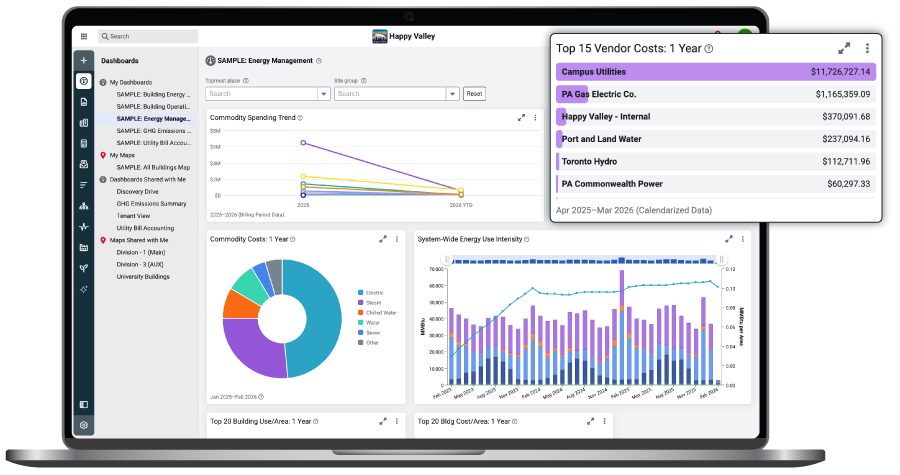
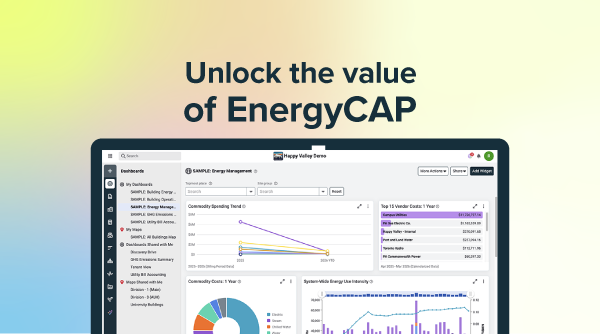
EnergyCAP supports energy managers by centralizing utility data, automating analysis, and surfacing actionable insights—so one person (or a small team) can drive outsized results.
Utility budgeting is one of the most frustrating exercises for finance teams. Costs fluctuate. Weather changes. Rates shift. And often, the only data available is historical spend. The result? Budgets that are either overly conservative or wildly off target. The missing piece is consumption.
To build accurate, defensible budgets, you need to understand:
Tracking dollars alone doesn’t provide that insight. For example, two buildings may have similar utility costs but completely different usage profiles. One may be operating efficiently, while the other is masking inefficiencies behind favorable rates or temporary conditions. Without consumption data, those differences are invisible. This is where finance and operations need to align.
By tracking both cost and consumption, you can:
When you understand how consumption trends are evolving, you can: anticipate future cost exposure, evaluate the financial impact of efficiency projects, and align capital planning with operational reality. In short, better data leads to better budgets and fewer surprises.

EnergyCAP gives finance teams visibility into both cost and consumption, helping you forecast with confidence and explain variances with clarity.
Energy efficiency projects often struggle to gain traction, not because they lack value, but because they lack alignment.
From a facilities perspective, the opportunities are clear:
But from a finance perspective, the questions are equally valid:
This is where finance leaders can play a critical role not as gatekeepers, but as partners.By engaging early and often, finance can help define evaluation criteria for projects, ensure savings are measured and validated, and prioritize initiatives with the strongest financial impact
And most importantly: let the data drive the conversation. Modern energy management isn’t based on assumptions it’s based on measurable outcomes.
With the right data, you can compare baseline vs. post-project performance, quantify cost avoidance over time, and validate whether expected savings are being realized. This reduces risk and builds confidence. It also creates a feedback loop. Successful projects generate proof points, which make it easier to justify future investments. Over time, energy efficiency shifts from a “nice-to-have” to a proven financial strategy. And that’s when momentum builds.
EnergyCAP enables this by providing a single source of truth—connecting facilities, finance, and sustainability teams with data that supports smarter decisions and stronger business cases.
Energy has traditionally been treated as a fixed cost of doing business. In 2026, that mindset no longer holds. Utility costs are rising. Variability is increasing. And the organizations that succeed will be the ones that actively manage and not just absorb these costs.
For finance leaders, this creates a clear opportunity:
Because when you take on these opportunities, energy becomes more than an expense. It becomes a lever for improving margins, reducing risk, and strengthening long-term financial performance.
Now is the time for finance leaders to take a more active role in managing energy costs. With EnergyCAP, you can move beyond reactive processes and start making data-driven decisions that improve budgeting accuracy, strengthen forecasts, and uncover meaningful savings opportunities. By bringing visibility to both cost and consumption, you gain the insight needed to reduce risk, validate results, and confidently support energy initiatives. If energy is becoming a larger part of your financial picture, it’s time to manage it with the same precision and strategy as any other critical cost.