




For most organizations, energy and utility costs sit quietly in the background; processed, paid, and filed away as a routine operating expense. But that mindset is becoming increasingly risky....



Headquarters
EnergyCAP, LLC
360 Discovery Drive
Boalsburg, PA 16827
Denver, CO
Suite 500
5445 DTC Parkway
Greenwood Village, CO 80111
Dublin, Ireland
Unit F, The Digital Court, Rainsford Street,
Dublin 8, D08 R2YP, Ireland
Phone: 877.327.3702
Fax: 719.623.0577
First off, and as always, thank you for keeping the lights on, the budgets steady, and the surprises rare. As we head into 2026, I want to share what I am seeing in our industry and how you can get ahead of it to take control of technology, savings, and costs.
AI drove the narrative in 2025, and it will continue to do so in 2026. AI data centers are putting real pressure on electricity and water resources. Capacity crunches, like those reported in PJM, translate into rate hikes, more complex tariff structures, and tighter margins. Plan for that. Treat rate analysis as a monthly ritual, not a once-a-year chore, and compare multiple rate schedules before you commit. Now might also be the time to start tracking interval data to optimize time-of-use and peak-demand tariffs.
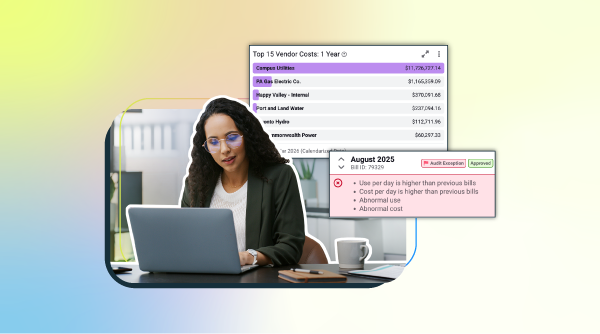
In volatile markets, the winners know the future. If your forecast is solid, you can hedge early and lock in value. If it is shaky, even a “good” fixed price can hurt. Tighten your forecast with interval data, understand the impact of weather (heating and cooling degree days) for each commodity, clean up your data tree or organization hierarchy in a utility bill management tool, and track bills carefully to understand shifts in use vs. cost vs. other fees. Good forecasting beats good luck, and it requires good data.
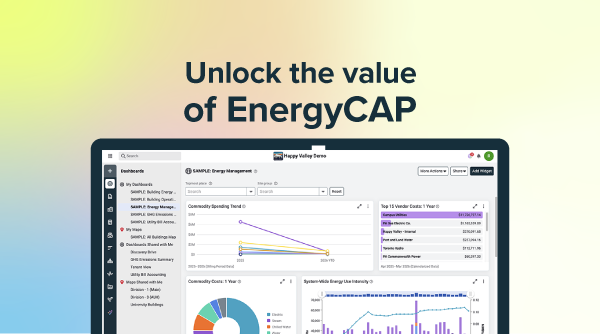
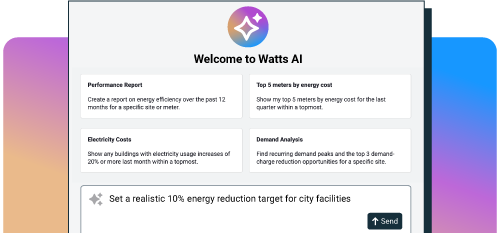
It’s easy to get buried in data or a pile of tools. AI is everywhere you look, but AI should make life easier in 2026, not feel like a science project. It should answer plain questions, flag issues, and point you to the projects with the most impact. Insights in EnergyCAP dashboards help non-experts get answers fast and let experts move even quicker.
If your platform (or your spreadsheets) can’t explain a spike, highlight a rogue meter, or summarize Energy Use Intensity on request, it is time to reevaluate. We’re even shipping tools that can seamlessly translate from “Energy Manager speak” to “Finance speak,” ensuring everyone has the insights they need and nothing gets missed.
Rising rates will push forward-thinking teams to add batteries, on-site solar, VPPs, and other forms of cogeneration. Before embarking on these projects, use interval data to model scenarios such as peak-shaving potential, tariff alignment, and battery dispatch rules. Further, ensure your systems can create virtual meters to accurately benchmark EUI, verify savings, and tune controls once the assets are live.
Smart meters are becoming more standard (in some places, and for some commodities). Submeters are increasingly affordable, but many teams lack simple, well-integrated software to analyze the data and extract insights. However, teams that do use interval data use it to perform M&V, track peak demand, estimate occupancy, split bills, double-check bills, spot leaks, and identify anomalous use. Whether you use EnergyCAP or a data historian, it’s essential to capture clean, time-aligned series ASAP so AI and Smart Analytics can mine that data.
California SB253 and SB261 begin to matter in 2026 for many companies doing business in the state. We’re already seeing an influx of organizations preparing to report GHG for the first time. Expect more requests for Scope 1 and 2 reporting, with growing interest in Scope 3 readiness. Centralize data now so compliance reporting is a simple checklist, not a fire drill. Carbon Hub can help unify emissions data with bills and meters, especially when utility bills account for the majority of your GHG emissions.
Energy leaders, you carry heavy responsibilities: operational, financial, and, increasingly, regulatory. My commitment is that EnergyCAP will continue to build a platform (and a community) that helps all of us save money, keep the lights on, and keep our world working. We’ve got big things ahead on our product roadmap as we help you harness AI and navigate a rapidly changing utility landscape.
If you want to compare notes or see these ideas in your data, my team is ready to help.
Thanks for all you do, and here is to keeping 2026 under control!
– Shawn Lankton
CEO of EnergyCAP