Headquarters
EnergyCAP, LLC
360 Discovery Drive
Boalsburg, PA 16827
Denver, CO
Suite 500
5445 DTC Parkway
Greenwood Village, CO 80111
Dublin, Ireland
Unit F, The Digital Court, Rainsford Street,
Dublin 8, D08 R2YP, Ireland
Phone: 877.327.3702
Fax: 719.623.0577

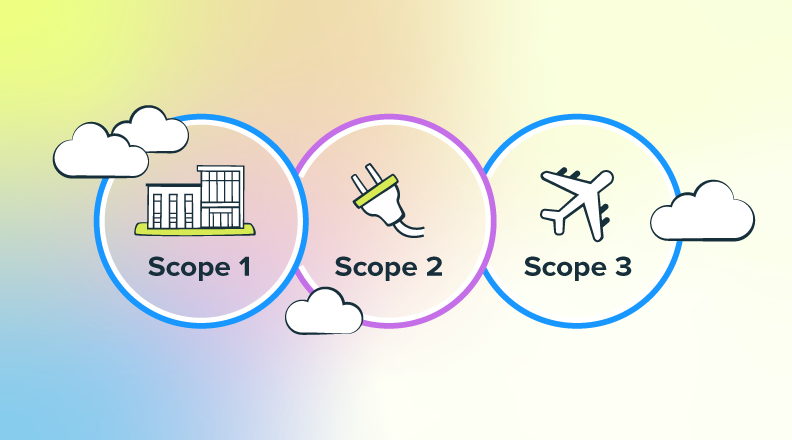
If you are evaluating sustainability management software, you’re likely wrestling with scattered utility bills, supplier spreadsheets, and inconsistent emission factors. The stakes are high: a 2024 CDP–BCG analysis found that supply chain (Scope 3) emissions can be 26 times higher than operational emissions in several sectors, highlighting the importance of clean inputs, lineage, and defensible calculations.
Last year, 88% of business executives said they plan to increase sustainability-related IT investments over the next year to improve data quality, accelerate reporting, and drive more innovative reduction strategies. Our guide breaks down the top software options, who each one is best for, and the features to prioritize as you move from spreadsheets to a reliable system of record.
Sustainability management software consolidates scattered data into a single, reliable record. Converge utility bills, meter readings, supplier files, and project details so that your team can work from a single source of truth. With cleaner inputs and consistent emission factors, you get defensible calculations, faster reporting, and less back-and-forth.
Sustainability software helps you move beyond manual spreadsheets. Automated imports, standardized data models, and built-in audit trails reduce risk while giving finance, operations, and facilities an up-to-date view of performance.
Pro Tip: For a deeper look at reporting workflows and evidence trails, see our guide to energy sustainability reporting best practices.
Benefits to expect:
Use this quick comparison to scan the best sustainability management software options side by side. Each row shows who the tool is best for and the top key features, so you can match capabilities to your priorities before shortlisting the best options.
| Sustainability management software | Best for | Key features |
|---|---|---|
| EnergyCAP Carbon Hub | Best overall for audit-ready carbon accounting built from utility data across large portfolios |
|
| Salesforce Net Zero Cloud | Salesforce-centric workflows and supplier engagement inside the platform’s CRM |
|
| IBM Envizi ESG Suite | Complex disclosure governance and cross-framework KPI harmonization |
|
| SAP Sustainability Control Tower | ESG metrics aligned to SAP ERP master data and processes |
|
| Persefoni | Disclosure preparation and review cycles for corporate reporting teams |
|
| nZero | High-frequency, time-of-use analytics and scenario modeling |
|
| Sphera | EHS-led programs integrating incidents, audits, and compliance |
|
| FigBytes (AMCS ESG Solution) | Strategy mapping and narrative visualization |
|
| Sweep | Supplier engagement and multi-entity value chain programs |
|
| Normative | Methodological depth, factor matching, and Scope 3 refinement |
|
| UL 360 (UL Solutions) | Template-driven ESG data collection with global workflows |
|

Best for: Best overall for audit-ready carbon accounting built from utility data across large portfolios
Key features:
EnergyCAP Carbon Hub turns utility and commodity data into a defensible carbon inventory. Starting from bills, meters, and submeters, it applies transparent, date-effective emissions factors to calculate Scope 1, 2, and relevant Scope 3 categories with complete lineage. Audit trails, attachments, and Powerviews make it easy to show where numbers came from and how they changed over time, factors crucial when finance, operations, and sustainability need to agree on one record.
Paired with EnergyCAP Utility Management and Bill CAPture, Carbon Hub reduces manual work by centralizing vendor and meter ingestion, aligning data with your organization’s hierarchy, and standardizing calculations across sites. Rate schedule awareness, ENERGY STAR® Portfolio Manager® connections, and robust validation help clean inputs before they become emissions, improving accuracy without creating extra workflows for your team.
For day-to-day insights and stakeholder reporting, Carbon Hub offers dashboards and exports that integrate with existing processes. Use Smart Analytics to identify building control issues, track the true impact of energy projects, improve forecasting and planning, and report faster. If you’re starting from scattered bills and meters, utility data is the first step in your sustainability strategy.

Best for: Salesforce-centric workflows and supplier engagement inside the platform’s CRM
Key features:
Salesforce Net Zero Cloud centralizes sustainability data inside the broader Salesforce platform. Organizations use it to structure metrics, automate collection with flows, and create dashboards that align with internal reporting and executive views. Because it shares user management and object models with the core CRM, sustainability data can sit alongside account, supplier, and project records, helping reduce duplicate entries and improving visibility across departments.
Teams can assign tasks, capture evidence, and manage approvals with role-based controls while maintaining a consistent audit trail. For Scope 3 work, Net Zero Cloud supports supplier questionnaires and category-level data capture. For performance monitoring, it offers configurable dashboards and exports that slot into BI tools or enterprise planning cycles without forcing a new tech stack.

Best for: Complex disclosure governance and cross-framework KPI harmonization
Key features:
IBM Envizi ESG Suite takes a modular approach to sustainability data management and reporting across complex portfolios. It provides structures for metrics, targets, and documentation, along with data quality checks and exception handling to maintain input consistency. Enterprises can use it to consolidate site, meter, and initiative data in one place, then map those records to KPIs for internal stakeholders in finance, risk, and sustainability.
Envizi supports permissioning, workflows, and evidence attachment to create a traceable path from source data to reported results. The reporting layer provides configurable outputs for management updates or external narratives, and the underlying data model can reflect real-world hierarchies, enabling teams to compare performance and track progress with fewer manual reconciliations.

Best for: ESG metrics aligned to SAP ERP master data and processes
Key features:
SAP Sustainability Control Tower is designed to harmonize sustainability metrics across SAP and non-SAP systems. It leverages existing master data to align operational information with sustainability measures, which can reduce mapping work for SAP-centric organizations. Teams can use it to aggregate data, maintain definitions, and prepare disclosure-ready views that match internal controls.
Control Tower helps standardize KPIs, permissions, and review flows, then distributes results through dashboards and exports for finance and operations. Because it sits near transactional systems, the platform can quickly reflect business changes, improving the timeliness of performance insights and keeping sustainability data close to the systems that generate it.
Pro Tip: Evaluating ERP-aligned options? Run through 15 questions to ask before you buy ERP.

Best for: Disclosure preparation and review cycles for corporate reporting teams
Key features:
Persefoni focuses on enterprise carbon accounting and disclosure workflows. The platform structures activity data, applies emissions factors, and produces review-ready outputs with clear logic and supporting documentation. Organizations use it to assemble inventories for Scope 1, Scope 2, and applicable Scope 3 categories. You can also manage collaboration across sustainability, finance, and operations.
Users can review calculation steps, maintain factor versioning, and route changes through approvals to protect data integrity. The export options align with common reporting structures, making it easier to feed results into corporate narratives or performance dashboards without having to rebuild calculations in spreadsheets.

Best for: High-frequency, time-of-use analytics and scenario modeling
Key features:
nZero emphasizes granular energy and emissions analytics, including time-based insights that can inform operational decisions. You can use the platform to analyze consumption patterns, evaluate reduction opportunities, and examine location-based versus market-based results where applicable. Portfolio views support campus, municipal, and multi-site contexts that require frequent updates.
This time-resolution focus enables scenario analysis and targeted initiatives. Facilities and sustainability teams can compare sites, track project impacts, and surface anomalies early. The system’s data handling supports continuous monitoring and reporting, helping users shift from retrospective summaries to more proactive performance management.
Pro Tip: Campus and district portfolios face unique data and stakeholder needs; learn more about campus sustainability and sustainable education.
Best for: EHS-led programs integrating incidents, audits, and compliance
Key features:
Sphera brings sustainability capabilities alongside established environment, health, and safety workflows. The platform provides data management, KPIs, and reporting tools within a broader operational risk context, which can be helpful for organizations that manage incidents, audits, and permits alongside sustainability priorities. Centralizing these disciplines can reduce duplicate collection and align governance.
Companies with mature EHS programs often use Sphera to connect safety, compliance, and sustainability information while preserving specialized processes for each area. Configurable dashboards and review steps support cross-functional visibility, and evidence handling helps maintain a defensible record from source input to reported outcome without leaving the operational ecosystem.

Best for: Strategy mapping and narrative visualization
Key features:
FigBytes, now part of AMCS, offers ESG data management paired with strategy mapping and narrative support. You can visualize goals, link initiatives to metrics, and assemble disclosure materials that reflect both performance and context. This approach helps stitch together the “why,” “what,” and “how” in a way stakeholders can follow.
Organizations use FigBytes to coordinate inputs from multiple departments and maintain a consistent storyline over time. Evidence attachment, tasking, and approvals keep contributors aligned, while exports deliver structured data for executive updates or public communications. The result is a more apparent connection between programs, data, and outcomes.
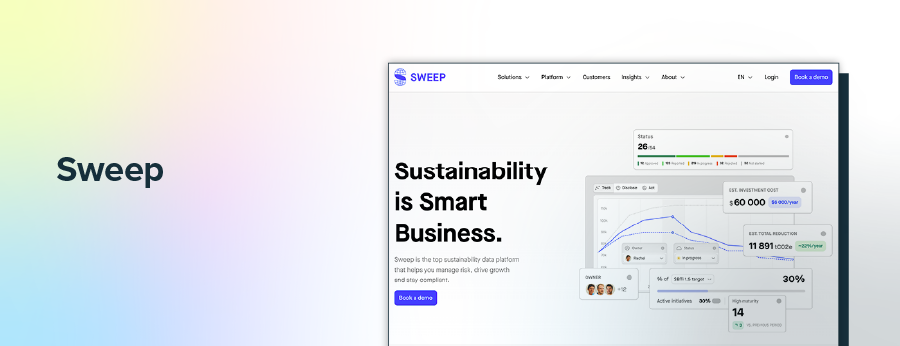
Best for: Supplier engagement and multi-entity value chain programs
Key features:
Sweep focuses on emissions management across complex organizations with value chain coverage. It supports multi-entity rollups, supplier engagement, and category-level data capture, which can be helpful when a large portion of the footprint sits with purchased goods and services or transportation. Collaboration features let distributed teams share responsibility for data and actions.
For ongoing management, Sweep provides dashboards, initiative tracking, and progress monitoring to show how changes affect the overall footprint. The combination of supplier workflows and internal metrics helps users compare contributions across business units and partners, then prioritize efforts that deliver measurable impact without losing data lineage.
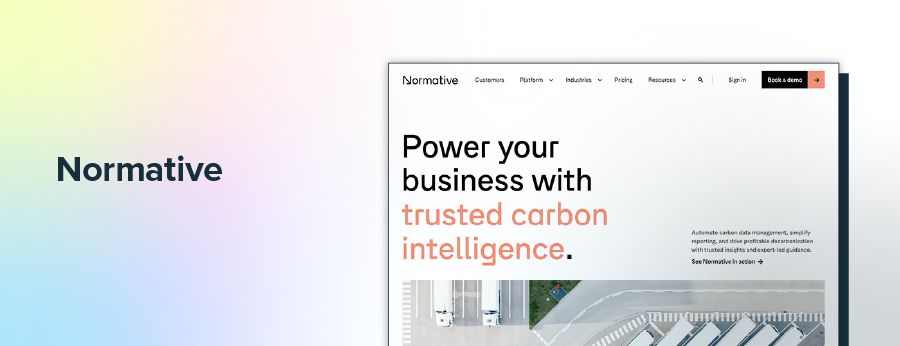
Best for: Methodological depth, factor matching, and Scope 3 refinement
Key features:
Normative centers on carbon accounting with careful mapping of activity data to emissions factors. The platform supports Scope 1, 2, and relevant Scope 3 categories and emphasizes methodological clarity so reviewers can trace assumptions and recalculate when new information is available. This detail can help teams align on categories and factors before results are shared.
Organizations may adapt Normative to improve calculation accuracy and documentation. Transparent factor management, category logic, and exportable reports make it easier to defend results in reviews and to iterate as supplier or operational data matures. The goal is a repeatable process that reduces one-off reconciliation work.
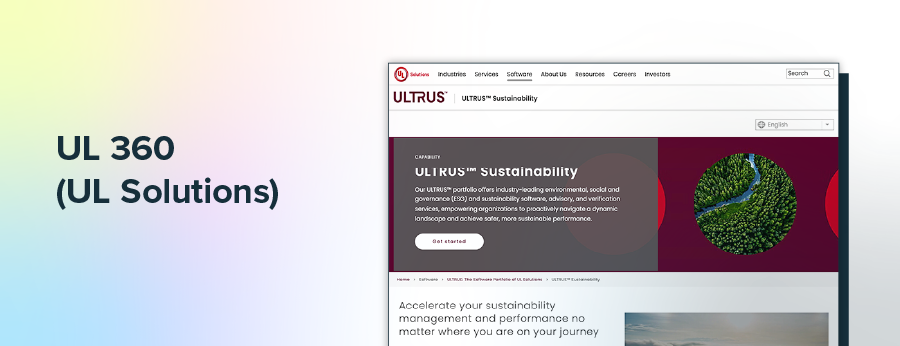
Best for: Template-driven ESG data collection with global workflows
Key features:
UL 360 provides ESG data collection, workflow management, and reporting for large, distributed portfolios. It helps coordinate inputs across departments and regions with structured templates, role-based reviews, and evidence handling. You can use it to maintain consistent definitions and timelines while assembling management updates and external narratives.
Enterprises value the platform’s audit-friendly controls and flexible modeling of organization hierarchies. Dashboards and exports enable both executive views and functional deep dives, reducing reliance on ad hoc spreadsheets. By keeping the data model and review steps consistent, UL 360 supports repeatable reporting cycles and greater transparency in accountability.
Choosing the right platform starts with clarifying your outcomes. Are you building investor-grade disclosures, calculating emissions, or managing facility performance across sites and meters? Each category emphasizes different strengths, from governance workflows and audit trails to energy analytics, supplier engagement, and reduction planning.
Ideal for: Legal, finance, and corporate comms teams coordinating enterprise disclosures
ESG and sustainability reporting platforms focus on sustainability data management software for disclosures and stakeholder reporting. They centralize metrics, standardize definitions, and provide review workflows, permissions, and audit trails. Expect templates, evidence attachments, and role-based approvals, which are helpful when multiple departments contribute data across your organization hierarchy.
Ideal for: Sustainability leaders who own Scope 1–3 inventories and reduction targets
Carbon accounting & climate management software is purpose-built for calculating emissions from activity data. Strong options offer factor libraries with version control, date-effective factors, and transparent lineage from source data to results. Look for features that support reduction planning, benchmark charts, and clear outputs you can share with finance and operations.
This is where Carbon Hub excels, turning utility and commodity data into defensible Scope 1, 2, and applicable Scope 3 figures with clear audit trails and shareable Powerviews.
Ideal for: Facilities and energy managers who run sites, meters, and projects
Energy & utility management platforms are designed for facility management sustainability software use cases. They ingest utility bills, meters, submeters, and interval data, then organize assets in a data tree and connect to ENERGY STAR® Portfolio Manager®. Expect Cost/Area insights, rate schedule alignment, and dashboards that make it easy to spot anomalies, prioritize projects, and communicate progress.
EnergyCAP Utility Management—with Bill CAPture for automated bill ingestion and Smart Analytics for dashboards and benchmark charts—provides this operational foundation that also improves downstream carbon accuracy. For large site clusters and central plants, district energy and sustainability best practices can help improve results.
Ideal for: Operations and risk teams focused on incident prevention and compliance
EHS systems concentrate on compliance programs, incidents, audits, permits, and training. Many now include sustainability performance features, such as KPIs, thresholds, and dashboards, but their core strengths lie in operational risk and safety management. EHS systems can complement carbon or energy tools when governance and recordkeeping are critical.
Ideal for: Procurement and category managers driving supplier engagement and Scope 3
Supply chain and supplier sustainability platforms are built for sustainable supply chain management software needs. They collect and manage supplier data, distribute questionnaires, and support category- or supplier-level emissions estimates. Systems like Carbon Hub can capture utility-linked Scope 3 categories and export clean datasets that accurately roll up with purchased goods and services data.
Decide whether you need sustainability data management software for investor-grade reporting, carbon accounting for Scope 1–3, facility management sustainability software for day-to-day operations, or sustainable supply chain management software for supplier engagement. Your use cases determine the core features, integrations, and team workflows you should prioritize.

Non-negotiables to require:
Evaluation tips:
Working from spreadsheets and email threads seems straightforward until scale, scrutiny, and timelines collide. Nearly half of companies still manage ESG data in spreadsheets, and more than half report data-quality challenges, which translates into rework, slower reporting, and higher audit risk.
Common pitfalls to expect:
The result is slower decisions, higher risk, and avoidable costs. A modern platform consolidates inputs, standardizes calculations, and creates a single source of truth, enabling finance, operations, facilities, and procurement to align on the same numbers and move faster.
The right sustainability management software centralizes your data, applies transparent factors, and gives finance, operations, and facilities the same numbers. With audit trails, dashboards, and an organization hierarchy, you can move from chasing data to making decisions.
Book an EnergyCAP demo to see your utility data flow end-to-end, get a quick data-quality assessment, and preview dashboards, Powerviews, and exports. See how you’ll get from spreadsheets to a single source of truth with EnergyCAP, expert-driven energy management software.
Think of the 5 Cs as a simple checklist to balance decarbonization, operations, and governance.
Use these pillars to organize KPIs and owners, so each area has clear data and accountability.
If your footprint leans on utility-linked categories, carbon tools that start with bills, meters, and defensible factors, such as EnergyCAP Carbon Hub, provide strong, auditable baselines. If most of your impact lies in purchased goods and services, transportation, or supplier activities, look for platforms with supplier questionnaires, spend/activity categories, and robust data import options.
Instead of chasing regulation-specific features, prioritize software that maintains clean data lineage, supports exportable mappings to common disclosure structures (e.g., ESRS-style categories), provides role-based approvals, and enables evidence attachment.
Start with the basics: accuracy you can defend, auditability you can prove, and a model that scales from one site to your full portfolio. Prioritize features that connect real operational data to clear, transparent calculations.





![Top 12 sustainability reporting platforms (ESG) [2026]](https://www.energycap.com/wp-content/uploads/2025/11/blog_thumb_top-sustainability-platforms.webp)