





If you’re justifying energy management software based on hours saved, you’re overlooking the biggest opportunities to reduce utility costs. Imagine walking into your CFO’s of...



Headquarters
EnergyCAP, LLC
360 Discovery Drive
Boalsburg, PA 16827
Denver, CO
Suite 500
5445 DTC Parkway
Greenwood Village, CO 80111
Dublin, Ireland
Unit F, The Digital Court, Rainsford Street,
Dublin 8, D08 R2YP, Ireland
Phone: 877.327.3702
Fax: 719.623.0577
Utility costs are climbing. EnergyCAP®’s 2026 State of Utilities survey found that 88% of healthcare organizations and 66% of government agencies saw their utility budgets increase last year. Across every sector, the story is the same: costs go up, budgets tighten, and the pressure lands on energy and facilities teams to deliver more with the same resources.
It doesn’t have to work that way.
With the right programs in place, 10% or more in annual utility savings isn’t a best-case scenario—it’s an achievable result. The question isn’t whether those savings exist. The question is whether your organization is positioned to capture them.
The answer lies in five independent areas of practice: the EnergyCAP Energy Savings Pillars. Each pillar delivers its own savings, and you don’t need to tackle them in order or complete all five before results start showing up. The more you have in place, the greater the impact.
More than half of EnergyCAP customers report saving 10% or more on their annual utility spend.
That 10% isn’t a single lever. It’s the sum of several independent savings streams that most organizations haven’t fully connected. Some start with catching utility bill errors and find it pays for everything else. Others start with usage monitoring because their operations team demanded it. Others get pushed into compliance reporting and discover the underlying data infrastructure improves everything above it.
The path doesn’t matter. The pillars do.

The five pillars span the full range of energy management practice, each targeting a distinct savings opportunity. They’re designed to stand alone, but together they represent every lever available to organizations managing energy and utilities at scale.
Billing errors are more common than most organizations realize. EnergyCAP flags more than 1 million billing errors annually across the platform. On average, 1 in 5 bills contains an error: duplicate charges, estimated reads that were never corrected, incorrect rate codes, charges for closed accounts. Those errors compound across every account in your portfolio, every month, until someone catches them.
Most organizations never do. Not because they don’t care, but because manually reviewing hundreds of bills is nearly impossible at scale.
EnergyCAP Utility Management automates that review. Every bill is audited against expected parameters the moment it arrives, so errors surface before they cost you. When all your utility data flows into a single, centralized platform, you stop paying for things you shouldn’t.

Utility bill management customers typically recover 1–3% of total utility spend in the first year: directly from error catches, refunds, and recovered credits. For a $2 million annual utility budget, that's $20,000 to $60,000 before you've changed a single lightbulb.
When you automate how utility data gets into your system, you eliminate the manual labor tax on billing accuracy and free your team to do actual energy management.
Manual bill entry is slow, error-prone, and expensive. Not just in staff time, but in the errors that slip through when people are transcribing hundreds of line items under deadline pressure.
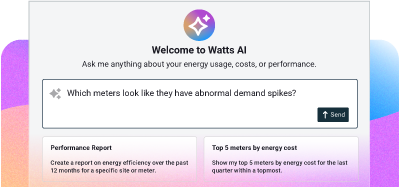
EnergyCAP Bill Capture retrieves bills directly from utility portals, normalizes the data, and delivers it into the platform without manual entry. As data arrives, Watts AI, EnergyCAP’s AI engine, works in the background to flag anomalies and catch issues before they become billing disputes. Bill Capture customers save nearly 40 hours of staff time every month on average compared to manual processes. That’s nearly a full work week per month returned to your team.
Automated data capture delivers savings from two directions: additional billing errors that automated capture catches above what manual review finds, and labor costs redirected from data entry to energy analysis. Together, these commonly push savings above the 3% mark.
When you can see exactly what your buildings are using, you can manage consumption, not just costs.
Utility bills tell you what you were charged. Interval data and submetering tell you why. EnergyCAP Interval Data brings both together: interval data analyzed against expected baselines, with alerts when a building diverges from its normal pattern.
This is where the largest efficiency savings live. Organizations using Interval Data identify inefficiencies that never show up in monthly bills: overnight loads that shouldn’t be there, demand peaks that drive up charges for the entire month, HVAC systems running on schedules that were never updated after a renovation.
Once you know where waste is happening, you can stop it. That’s the shift from reactive energy management—paying bills and responding to problems—to something more valuable: finding and eliminating waste before it hits the next bill.
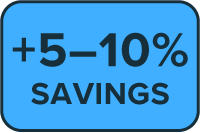
Usage monitoring and conservation measures account for the largest single savings category across EnergyCAP customers. This is where most organizations break through the 10% barrier. Organizations that monitor and respond to interval data consistently outperform those that rely on monthly billing data alone.
How Interval Data empowers serious cost savingsWhen energy data connects to financial systems, you recover costs you’re currently absorbing, and you build the budget visibility to invest in more savings.
Energy costs don’t belong to one team. Finance teams need accurate accruals. Facilities needs cost-per-site visibility. Tenants or internal departments in shared facilities need to pay for what they actually use.
EnergyCAP Chargebacks and the Accounting module connect utility data directly to those workflows: automated cost allocation by submeter, GL-ready exports, and budget vs. actual tracking at every level of your organization. Customers using Chargebacks routinely recover costs that were previously absorbed into operating overhead, and surface budget variances that would otherwise go unnoticed until year-end.
Finance teams get the visibility to plan accurately. Energy teams get the budget justification to invest in the next project.
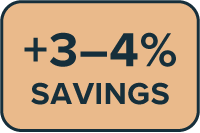
Financial integration delivers savings through tighter accruals and forecasting. Organizations using these features typically recover 3–5% of utility spend that was previously unattributed or absorbed.
When your energy data supports compliance and sustainability reporting, you protect your organization from the costs of getting it wrong.
The regulatory environment is tightening faster than most energy teams’ data infrastructure can keep up. California’s SB 253 requires Scope 1 and 2 emissions disclosures beginning in 2026. New York’s statewide benchmarking mandate is expanding. Building performance standards are proliferating at the state and local level.
Organizations without auditable, centralized utility data will struggle, and the cost isn’t just a fine. It’s the staff time to reconstruct data retroactively, the consultant fees to fill gaps, and the reputational exposure when disclosures are incomplete.
EnergyCAP Emissions provides financial-grade Scope 1, 2, and 3 emissions data built on the same utility bill and meter data that drives the rest of the platform. Organizations using Emissions move from scrambling to comply to proactively managing their emissions trajectory, using the same auditable data trail that finance already requires.

Compliance and reporting savings are primarily risk avoidance: the cost of non-compliance, data reconstruction, and reputational exposure avoided by maintaining clean, auditable emissions and benchmarking data year-round. For organizations subject to mandatory disclosure laws, this pillar is no longer optional.
Tom spent a decade as an energy manager before joining EnergyCAP. He has watched organizations sit with one or two pillars in place for years, leaving most of their potential savings untouched. He has also watched organizations activate all five, in whatever order made sense for their team, and deliver results that would have been unimaginable at the start.
The order doesn’t matter. The coverage does.
The 10% figure appears consistently in EnergyCAP customer data because each pillar contributes independently, and their savings don’t just add, they reinforce each other:
clean bill data makes usage monitoring more reliable, because you’re working from accurate baselines
automated data capture frees up the staff time to act on what Smart Analytics surfaces
usage-driven savings build the track record that justifies capital investment in efficiency projects
financial integration gives leadership the visibility to prioritize and fund those projects
compliance and reporting locks in progress and protects against regulatory risk that could eat the savings you’ve built
Customers who build across all five pillars don’t just save more. They save in a way that’s defensible, repeatable, and recognized by finance and leadership as a real business function, not an operating line item that gets cut when budgets tighten.
Each pillar adds something. Together, it all adds up.
See which pillars your organization is missing—and how fast they add up.
See which pillars your organization is missing. Request a demoThe EnergyCAP Energy Savings Pillars are five independent areas of energy management practice that together account for the full range of utility savings available to large organizations: utility bill management, automated data capture, usage monitoring, financial integration, and compliance and reporting. Unlike a sequential model, the pillars can be built in any order—each one contributes its own savings regardless of which others are in place.
Energy management reduces utility costs through several independent mechanisms: catching billing errors before they’re paid, identifying and eliminating energy waste through usage monitoring, recovering costs from departments and tenants through chargebacks, and avoiding the cost of regulatory non-compliance. Each mechanism addresses a different savings opportunity, and they don’t depend on each other to deliver results.
1 in 5 utility bills contains an error, based on EnergyCAP platform data across more than 1 million billing errors flagged annually. Common errors include duplicate charges, estimated reads that were never corrected, incorrect rate codes, and charges for accounts that have been closed or transferred. Most organizations never catch these without automated auditing because manual review of hundreds of bills per month is not feasible at scale.
No. Many organizations reach 10% or more in annual utility savings with two or three pillars in place, particularly when usage monitoring is one of them. The pillars are independent—each one contributes its own savings. Organizations that build all five consistently exceed the 10% benchmark, but the path to 10% doesn’t require a specific sequence or a complete set.
Cost avoidance is the measurement and verification of savings achieved through energy management projects, calculated by comparing current utility spend against an adjusted baseline that accounts for changes in weather, occupancy, and rates. It is the standard method for quantifying the impact of efficiency measures and is essential for building the business case for continued investment. EnergyCAP uses the Whole Facility Method from the International Performance Measurement and Verification Protocol (IPMVP).