







Last winter’s utility bills might not be the best predictor of what this winter will cost. Utility rates are rising, weather patterns fluctuate, and building operations change. Yet when ...


Headquarters
EnergyCAP, LLC
360 Discovery Drive
Boalsburg, PA 16827
Dublin, Ireland
Unit F, The Digital Court, Rainsford Street,
Dublin 8, D08 R2YP, Ireland
Phone: 877.327.3702
Fax: 719.623.0577
Last winter’s utility bills might not be the best predictor of what this winter will cost. Utility rates are rising, weather patterns fluctuate, and building operations change. Yet when winter bills arrive, it’s tempting to compare them to last year’s numbers and assume that anything higher signals a problem. But a higher bill doesn’t necessarily mean a building is performing worse. And a lower bill doesn’t always mean it’s performing better.
The difference between actual and expected utility spending is called utility cost variance. The challenge is determining how much of that difference can be explained by changes in rates, weather, and operations, and how much remains unexplained.
Understanding which changes deserve attention can make the difference between another February spent investigating surprises and one where the numbers make sense.
Historical utility spending reflects last year’s rates, weather, and operations. Change any of those factors, and a direct year-over-year comparison can paint an inaccurate picture. In EnergyCAP’s 2026 State of Utilities survey, 76% of organizations reported rising utility costs, with one in five experiencing increases of 10% or more.

Consider a commercial building whose January electricity costs increased 15% compared with the previous year. That might suggest the building is consuming more energy or operating less efficiently. But what if electricity rates increased 9% and the winter was significantly colder? Some of that additional spending may be entirely expected. Before assuming there’s a problem, examine four potential drivers:
These factors often overlap, but examining them separately helps distinguish expected increases from issues worth investigating. Last year’s bill tells you what you spent under last year’s conditions, not necessarily what you should expect today.
A building can spend less on energy while becoming less efficient. Imagine a retail location whose natural gas costs dropped 8% compared with the previous winter. That sounds promising, but what if the current winter was considerably warmer?
If heating demand declined significantly while gas consumption fell only slightly, the building may actually be using more energy than expected for the conditions. The reverse can also happen. A building might spend more because of colder weather or higher rates while operating more efficiently than before. That’s why cost alone isn’t always a reliable measure of performance.
Weather-normalized consumption provides a more meaningful comparison by accounting for differences in heating and cooling conditions. Depending on the facility, occupancy, production output, and operating hours may also need to be considered. The goal is to establish what consumption should reasonably look like under comparable conditions. Once you have that baseline, deviations become more meaningful. Before celebrating a decrease or investigating an increase, determine whether building performance changed or the conditions around it did.
Not every anomaly deserves the same attention. A dramatic increase may attract attention, but smaller recurring problems can have a greater financial impact over time.
Consider two scenarios:
Scenario A has the larger individual increase, but Scenario B may deserve more attention because the additional costs could continue accumulating. By month seven, the recurring increase would total $5,600, exceeding the one-time expense in Scenario A.
A practical way to prioritize anomalies is to evaluate four factors:
| Factor | Question to ask |
| Financial impact | How much is the unexplained change costing? |
| Persistence | Is it a one-time event or a recurring pattern? |
| Controllability | Can facilities influence or correct the cause? |
| Confidence | Is the data reliable enough to confirm the anomaly? |
This approach helps facilities teams focus on issues that present the greatest opportunity for corrective action rather than simply chasing the largest increases.
Different patterns point to different causes. Knowing where to look can make investigations faster and more productive.
Costs increase, but consumption stays flat. Start with utility rates, supply pricing, and demand charges. A facility can use the same amount of electricity but pay more because of rate adjustments or a brief demand peak that affects the billing period. Compare effective cost per unit and review individual bill components before assuming there’s an operational issue.
Consumption increases without an obvious explanation. Look at when the additional energy is being used. Elevated overnight consumption might indicate equipment running outside scheduled hours or HVAC controls operating incorrectly. Interval data, where available, can help pinpoint when changes occurred, while comparisons with similar facilities provide additional context.
The bill doesn’t match expectations. Estimated meter readings, incorrect rate classifications, duplicate charges, and billing adjustments can create discrepancies unrelated to building performance. Review unusual charges against historical patterns and account details to identify potential errors. The goal isn’t to investigate every fluctuation. It’s to recognize exceptions, understand their causes, and focus on the ones that warrant action.
Finding an unusual charge three months after it happened is useful. Identifying it before the bill is approved is better.
The same applies to operational issues. Recognizing unexpected consumption early may allow facilities to address the underlying problem before another month of unnecessary costs accumulates. But across dozens or hundreds of utility accounts, manually reviewing every bill and monitoring every building can be difficult to sustain.
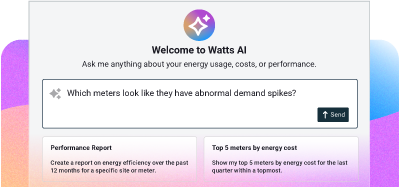
EnergyCAP® centralizes utility information across accounts, meters, and buildings, helping facilities and energy managers monitor consumption, understand cost changes, and identify potential billing issues through automated audits.

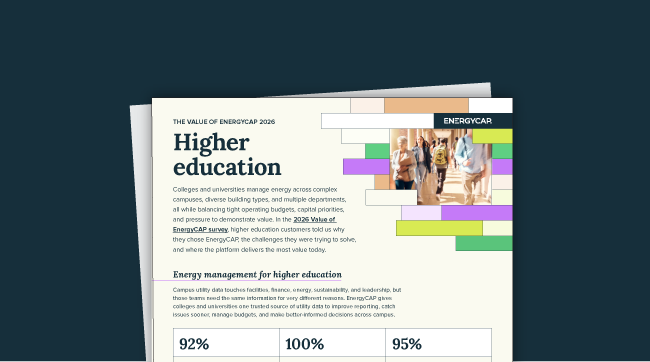
In the 2026 Value of EnergyCAP research, 95% of surveyed customers said EnergyCAP helped them identify operational issues that otherwise would have gone unnoticed. Additionally, 88% said EnergyCAP reduced their risk of utility billing errors. The value of utility data isn't simply knowing what you spent. It's understanding what's changing and having the information to act.
Learn more from the 2026 Value of EnergyCAP researchUtility rates will change. Winter weather will affect consumption. Operational issues and billing mistakes will happen. You can’t eliminate every unexpected expense, but you can change how quickly you recognize it and how confidently you respond.
When you can separate expected increases from unexplained costs, you spend less time investigating numbers that make sense and more time addressing problems that don’t. Making February a non-event isn’t about keeping utility costs from changing. It’s about understanding those changes before they become a problem.
Unusual consumption, billing errors, and unexpected charges can go unnoticed for months. See how EnergyCAP helps you identify issues sooner and take action before costs add up.
See how EnergyCAP helps